I had never worked with elm before -not that I know of, anyway. To be honest, I agreed to use it because it was there. I wanted to make a substantial piece of furniture using a wood species that would ensure a certain longevity to my work. Of course, it’s not that oak, cherry or walnut will last longer than softwoods; like most things generally, it mainly depends on the care that the eventual owner will handle the piece with, most likely based on the value of the wood itself or the price they paid for the product.
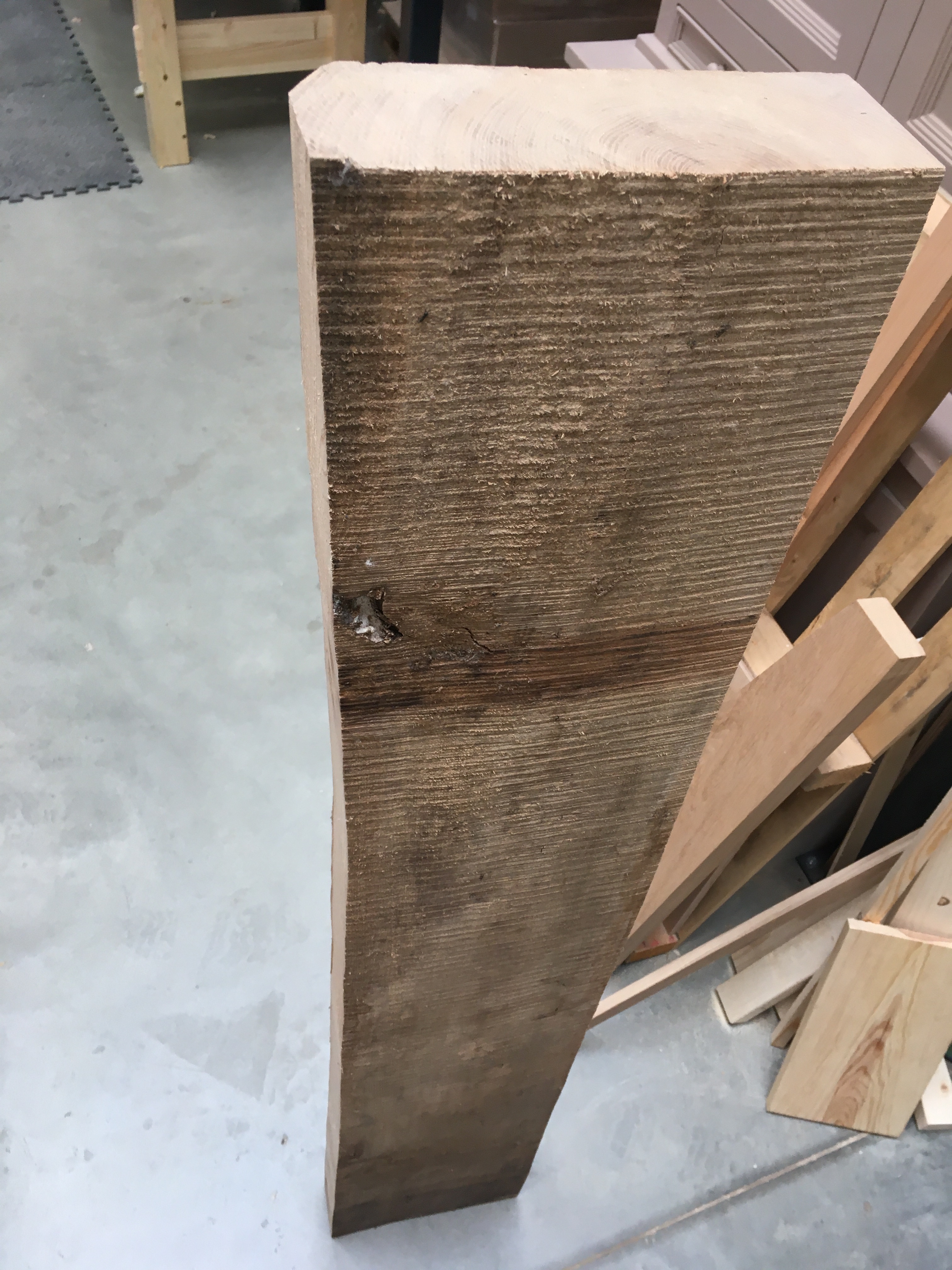
Anyway, Paul suggested a couple of options and I went for the elm. It was very ugly when I first saw the rough slab of wood. Even after a while, it didn’t seem to get much better as I planed off the humps, saw marks, spider webs and whatever else had accumulated during its seasoning phase. It did have knots all over; and I know Paul well enough to confidently say he’s not overly fond of knots. However, he was quite keen to see me make the chair (his chair) in a different wood, unlike any he had ever made (or seen it made) with before.


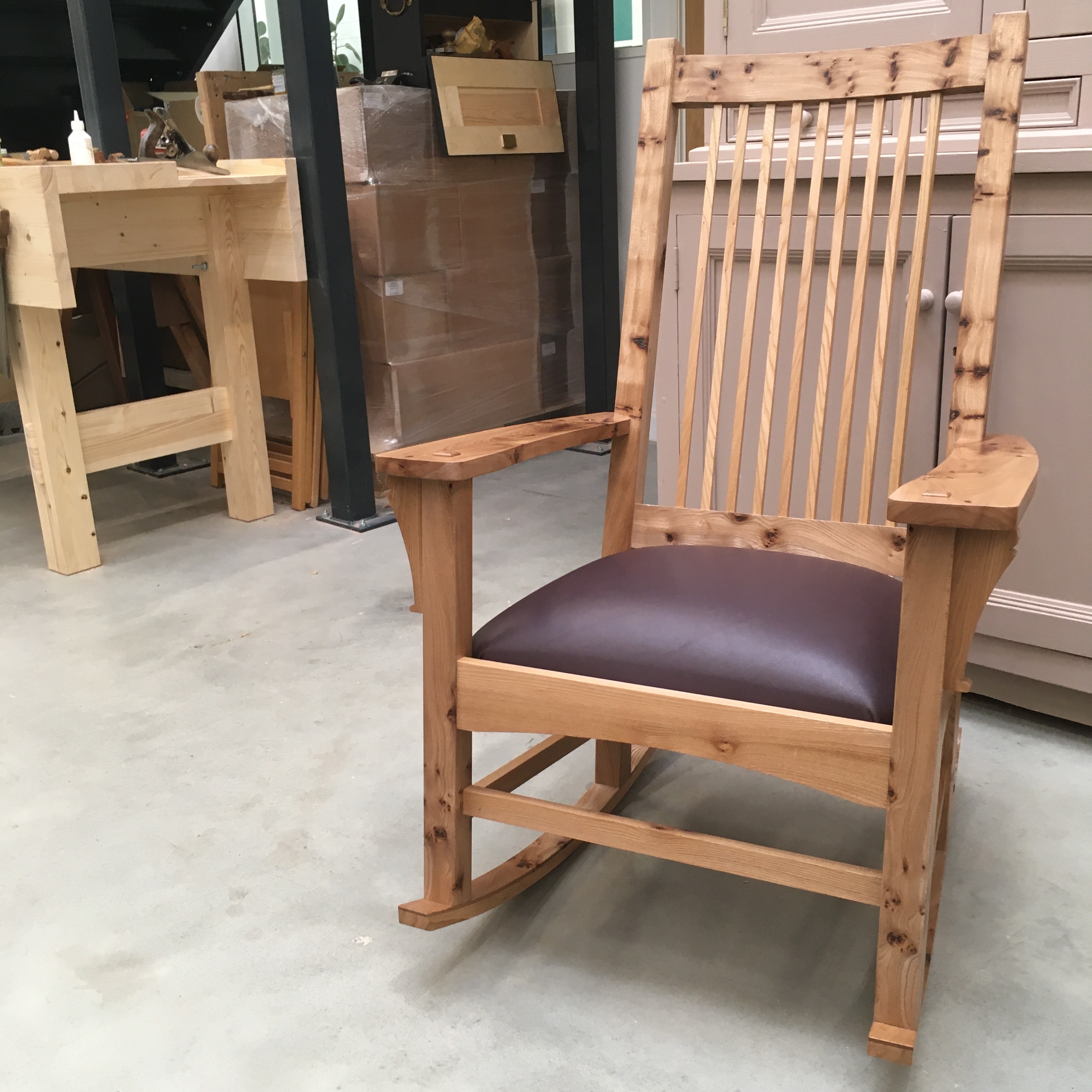
Contrary to my intuition, the elm proved quite docile with regards to the joinery, as well as when hand planing and scraping the surfaces – as long as I stayed on top of sharpening the tools, of course. The characteristic interlocking grain, or ‘burl’ that so sets elm apart from other woods certainly did raise some complications when cutting curved components, but the wild grain did not cause any issues when chopping the mortise holes, and cutting the tenons was a truly enjoyable.

Picking the right pieces of wood and orientation for each component was my most challenging task. It seems so much simpler when the parts are pre-cut and all the preparatory work consists of surface planing and arranging the pieces to find a good balance, or when you have a large supply of a relatively knot-free wood like oak. But with a wood like elm, with such a diverse and changing grain, and a very limited supply to source my parts from, it took a great deal of time and brain power to find the point of equilibrium. In my case, this involved some veneering work where it seemed necessary to reach this balance. The grain and colour of the wood should never overpower the design of the piece, even if working with the fanciest grain configurations. Without this in mind, a great design could easily fall short of its glory, regardless of how perfect the joints come out or how smooth a finish you can achieve.
Over time I have realised that this seemingly burdensome process (in the sense that you don’t see immediate results) is a most necessary aspect inherent to the craft, and can be enjoyed as much as the actual ‘making’ if undergone with the right mindset. In a sense it’s a matter of delayed gratification (initially, at least), and there are other such woodworking tasks, like sharpening your tools, planing your stock four-square, flat, out of twist and to an even thickness, or keeping your work area clean and tidy. Over time, when you accept that these tasks are fundamental to the the making process, you start to take joy in them, and even look forward to them, whereas initially, your motivation was only to see the assembly of a piece coming together. You begin to appreciate these seemingly tedious aspects (even sanding, may I add!) as a crucial element of your work and that’s when you start seeing things differently; each task serving a function and not to be disregarded, but valued in its rightful place.

Neglecting some of these aspects of woodworking won’t necessarily result in a lower quality piece of furniture, but will most likely bring about more problems that can be very frustrating and time consuming. These inevitably lead to a less enjoyable process -and eventually lifestyle- if maintained over time. Unexpected issues do come up when working wood, but when solving unplanned problems takes up much of your workday, in a way that makes you more a restorer than a maker. The worst that can happen to a maker is to lose the internal motivation inherent to the making process. If the only thing that drives you is seeing the final piece finished (or worse still, selling it), you’ll undoubtedly turn to machine only methods. A respectable way of working, sure; but you’ll miss out from the joy of making with your own hands and energy, engaging with the wood in a completely different level.

To end, I would like to say that this process is not immediate. Like every other change, it takes an interval of time, which can be longer or shorter for each one of us, but the key is to carry on making! It takes a lot of perseverance until you finally attain it, but it’s worth the sacrifice because the end result is that you change. You start to care about the process, and not just the final product. And it’s not a question of wishful thinking or mind over matter, but a real transformation within you that you cannot undo. (Or so I’d like to think.) That is the power of craft, and to be overcome by it is fundamental to becoming a true artisan.


 Paul's Apprentice
Leave a reply to Harun Cancel reply